
 Alpha Romeo Engines
 Audi Volkswagen Engines
 BMW Engines
 Chevrolet Engines
 Citroen Engines
 Daewoo Engines
 1/8 RC300 Nitro
 30 Degrees North
 ARRMA
ARRMA BlackZon
 Carrera
 Carson
 ECX RC CARS
 Ford
Ford FTX
FTX Kyosho
 Losi
Losi Mugen
Mugen rc4wd 1/10
 Rovan
Rovan Schumacher
 Spider
 Tamiya
 Traction Hobby
 Traxxas
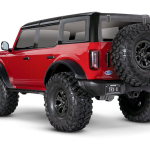 Trx-4
Trx-4 Vanquish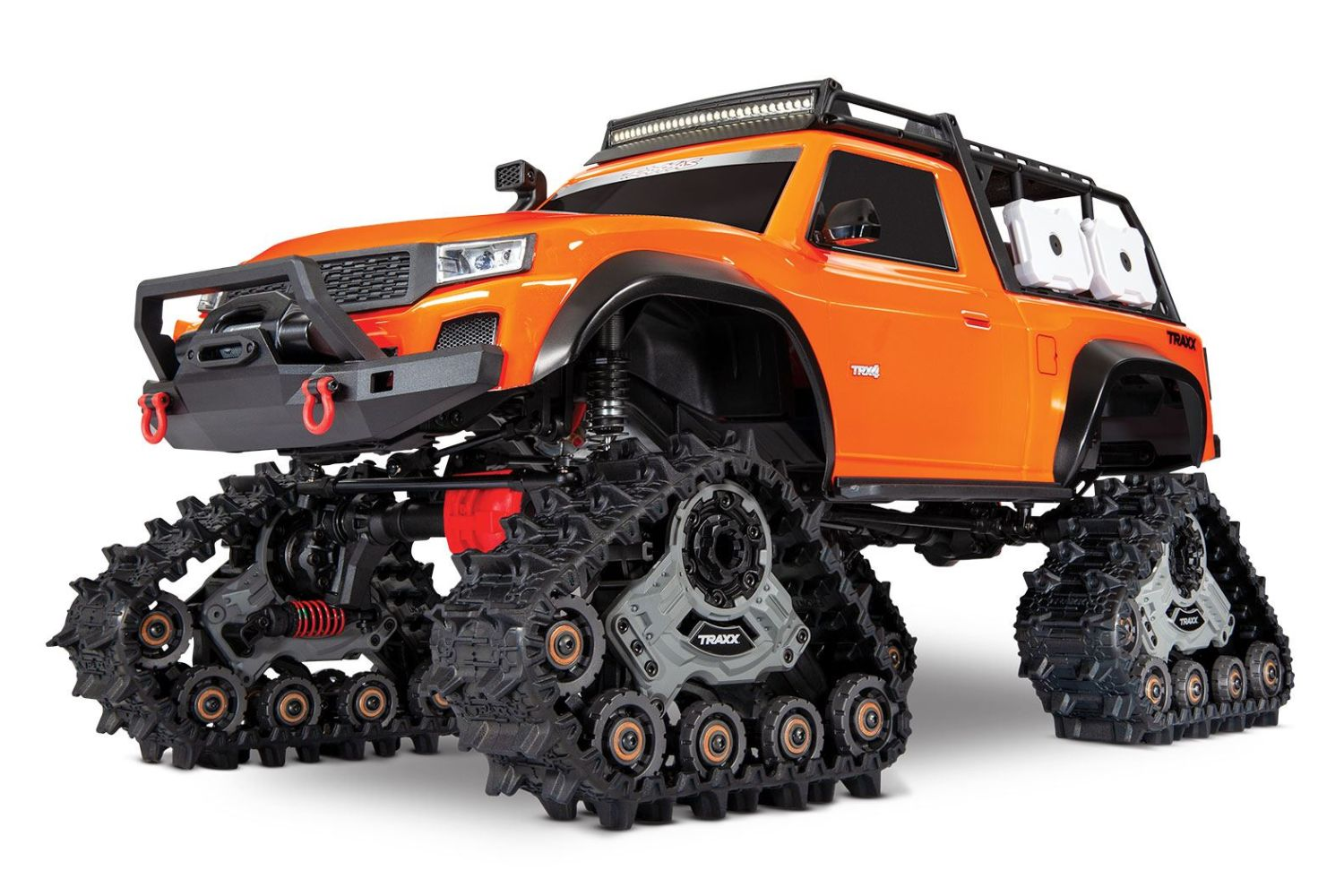
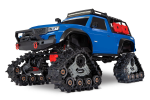

Traxxas TRX-4 Sport Crawler with All-Terrain Traxx: Complete Buying Guide
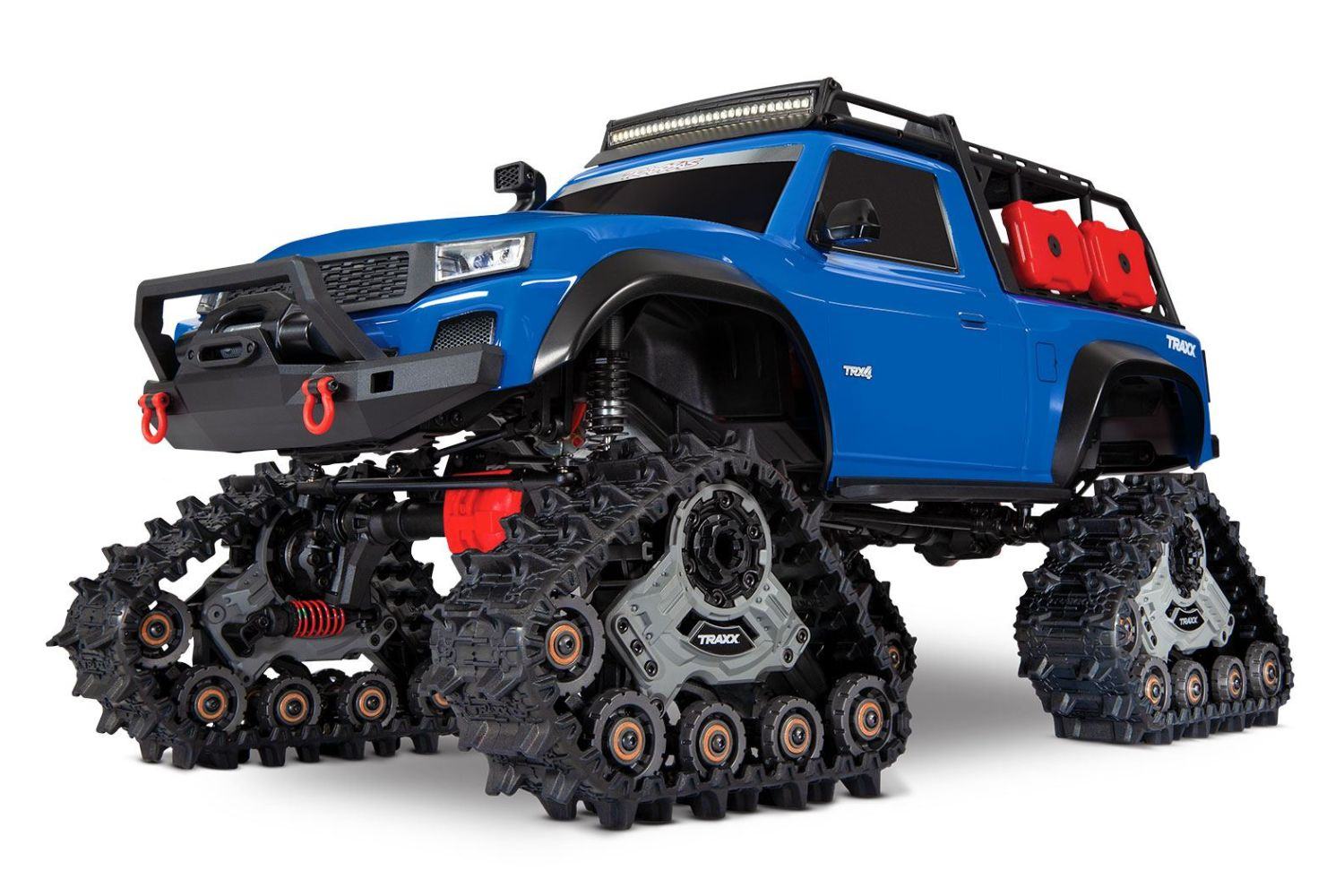
If you want an RC crawler that can go far beyond ordinary dirt trails, the Traxxas TRX-4 Sport Crawler with All-Terrain Traxx is built around a very specific idea: maximize traction and off-road capability where conventional tires begin to struggle.
This combination takes the lightweight, performance-focused TRX-4 Sport platform and pairs it with Traxxas All-Terrain Traxx, including the Deep-Terrain Treads designed for loose surfaces such as mud, sand and snow. Traxxas describes the Deep-Terrain Treads as being engineered to dig into loose terrain while their wide contact patch helps keep the vehicle from sinking.
The result is a particularly interesting choice for buyers who want a crawler for extreme trail conditions rather than a scale vehicle primarily intended for display.
The TRX-4 Sport itself is designed around off-road performance. Unlike other TRX-4 variants that emphasize scale realism and additional drivetrain features, the Sport uses a simplified, purpose-built configuration with a single-speed transmission and solid axle spools for maximum traction. Traxxas describes the Sport as a lightweight, trail-focused member of the TRX family.
Add the All-Terrain Traxx system and the vehicle becomes especially suited to soft, loose and difficult surfaces.
Why Buy the TRX-4 Sport with All-Terrain Traxx?
The primary reason to buy this configuration is traction in terrain where ordinary RC tires can lose their advantage.
Traditional tires are excellent for many crawling situations. They can conform to rocks, grip dirt and provide predictable steering. But deep sand, powdery snow and thick mud present a different challenge. Tires can dig down into the surface and cause the vehicle to sink rather than move forward.
Traxxas’ All-Terrain Traxx address this problem with a much larger contact area. The company states that the wide tread distributes the vehicle’s load across the surface, helping prevent the vehicle from sinking or becoming bogged down.
The Deep-Terrain Treads take that concept further by using an aggressive tread pattern designed to bite into soft surfaces.
For buyers who frequently drive in wet, sandy, snowy or muddy environments, this can be a much more meaningful upgrade than simply purchasing another set of conventional crawler tires.
What Are All-Terrain Traxx?
Traxx are rubber track systems designed specifically for compatible TRX-4 models.
Instead of four conventional tires, the vehicle uses continuous rubber tracks that provide a much larger contact patch. Traxxas explains that the system uses adjustable tension and suspended road wheels so the tracks can conform to uneven terrain.
This changes how the crawler interacts with the ground.
A conventional tire concentrates the vehicle’s weight over a relatively small contact area. A track system spreads that load over a much wider footprint.
The advantage is particularly noticeable on surfaces that lack firmness.
That includes:
- Deep sand
- Soft mud
- Snow
- Loose dirt
- Wet trail sections
- Soft forest terrain
- Other low-density surfaces
Traxxas also states that its All-Terrain Traxx can add more than 16 mm of ground clearance to the TRX-4.
That extra clearance can help when the crawler encounters obstacles beneath the chassis or axle assemblies.
Why Deep-Terrain Treads Are Different
Not all Traxx systems are identical.
The Deep-Terrain Treads were developed specifically for demanding loose-surface conditions. Traxxas describes their tread design as digging into and packing loose surfaces to create traction, while the wide contact patch helps maintain flotation.
This makes them particularly relevant if your driving environment includes:
Mud: Aggressive tread can help the vehicle continue moving when ordinary tires start spinning.
Snow: The wider footprint helps distribute weight across soft snow rather than allowing the vehicle to sink as quickly.
Sand: A large contact area can help maintain forward movement across loose sand.
Soft trail terrain: Tracks can spread the vehicle’s load across surfaces where narrow tires may dig in.
For buyers who live in areas with seasonal snow or frequently explore muddy trails, these characteristics can make the Traxx system more than a novelty.
Is the TRX-4 Sport Good for Rock Crawling?
Yes, but its strengths are worth understanding.
The TRX-4 Sport is purpose-built around all-terrain capability. Traxxas describes the Sport’s fully locked axles, performance-oriented bumpers and lightweight single-speed transmission as features intended to maximize climbing and crawling performance.
The solid axle spools mean the axles are locked rather than using remotely selectable open differentials.
That is an important distinction.
A standard TRX-4 can use remotely controlled differential locking to switch between more relaxed trail driving and maximum traction. The Sport instead prioritizes traction from the outset. Traxxas confirms that the Sport and Sport with Traxx use solid spools, while T-Lock differentials are available as an optional upgrade.
For serious crawling, that straightforward setup can be an advantage.
What Makes the TRX-4 Sport Different from a Standard TRX-4?
The Sport is essentially the performance-focused member of the TRX-4 family.
A conventional TRX-4 is designed to combine scale features with trail performance. The Sport removes some of that complexity and focuses more directly on capability.
Traxxas describes the Sport as having a lightweight single-speed transmission geared for substantial torque. It also uses purpose-built bumpers with strong approach and departure angles.
This creates a crawler that is less about reproducing every detail of a full-size vehicle and more about getting through the terrain.
That makes the Sport particularly attractive to buyers who say:
“I care more about crawling performance than scale accessories.”
If that describes you, the Sport deserves serious consideration.
How Do the All-Terrain Traxx Improve Performance?
The biggest advantage is the size of the contact patch.
Traxxas explains that the greater contact area distributes the vehicle’s load across a broader section of the surface. This can reduce sinking in soft terrain and improve traction.
The tracks also use an adjustable tension mechanism. Suspended road wheels allow the system to adapt to surface irregularities rather than behaving like a completely rigid track assembly.
That makes the system especially interesting for terrain that is difficult for traditional wheels.
However, buyers should not assume that tracks automatically make the crawler superior in every situation.
On hard rock, conventional crawler tires can provide excellent grip and precise contact with individual obstacles. Tracks are particularly valuable when flotation and soft-surface traction are the priority.
In other words, the right setup depends on where you drive.
Is the TRX-4 Sport with Traxx Ready to Run?
The answer depends on the exact package and model number being purchased.
Traxxas sells TRX-4 Sport models as Ready-To-Run vehicles, and its official documentation identifies current Sport models separately from the Sport with Traxx configurations. The standard TRX-4 Sport listing identifies the vehicle as a 1/10-scale model with a brushed motor, while battery and charger are listed separately on the current product page.
Buyers should therefore check the retailer’s exact package contents before ordering.
Confirm:
- Vehicle model number
- Radio system
- Motor
- ESC
- Steering servo
- Battery requirements
- Charger requirements
- Installed Traxx system
- Included conventional tires, if applicable
- Warranty
This is particularly important when buying older inventory, international versions or specialty bundles.
What Comes with the Deep-Terrain Traxx System?
Traxxas identifies Deep-Terrain Treads as a four-piece set consisting of two front rubber tracks and two rear rubber tracks. The official installation documentation lists the four rubber track assemblies and explains the installation procedure.
The Traxx system itself is designed around the compatible 8880 Traxx assembly, while the Deep-Terrain Treads are identified as part 8877. Traxxas states that the Deep-Terrain Treads work with TRX-4 models equipped with Traxx and require the 8880 Traxx system.
That distinction matters when buying replacement or upgrade components.
If you are purchasing the complete vehicle rather than adding tracks later, verify that the listing explicitly says the Deep-Terrain Treads are included.
Can You Switch Between Tracks and Tires?
Yes, and this is one of the most useful aspects of the system.
Traxxas has demonstrated TRX-4 models equipped with Traxx being converted between tracks and conventional tires depending on trail conditions. Its documentation describes a TRX-4 with Traxx being supplied with a separate set of conventional tires for changing conditions.
This gives the owner greater flexibility.
You can use tracks when:
- Snow is deep
- Sand is soft
- Mud is thick
- The trail surface is loose
And conventional crawler tires when:
- Rock crawling
- Hard-packed dirt
- Mixed trail driving
- Precise obstacle placement
- You want traditional tire handling
For someone who enjoys experimenting with different terrain, this versatility is a major selling point.
Important Deep-Terrain Track Installation Considerations
The Deep-Terrain Treads require correct tension.
Traxxas’ installation instructions specify a factory tensioner setting and warn that excessive tension can create very high drivetrain loads, potentially causing motor failure or premature wear of track components.
This is one of the most important things buyers should understand.
More tension is not necessarily better.
The track needs sufficient tension to operate correctly, but overtightening increases mechanical resistance.
Traxxas also warns that body, bumper or rock-slider clearance may require minor trimming after installing the Deep-Terrain Treads. The installation documentation notes that additional body clearance may be required depending on the setup.
If you plan to install tracks on an existing TRX-4 Sport, read the installation instructions before modifying the vehicle.
What Gear Should You Use with Deep-Terrain Treads?
Track systems can put additional load on the drivetrain.
Traxxas specifically cautions that models equipped with two-speed transmissions should be driven in low gear when using Deep-Terrain Treads to avoid overheating and permanent motor damage. For single-speed models such as the TRX-4 Sport, the manufacturer’s installation documentation provides gearing guidance for different battery and terrain conditions.
The TRX-4 Sport’s stock gearing is also documented by Traxxas as a 17-tooth pinion with a 39-tooth spur gear. Traxxas warns against over-gearing because excessive gearing can increase motor and speed-control temperatures.
This is why buyers should resist the temptation to chase higher speed with aggressive gearing.
With a crawler, controlled torque and thermal management are usually more important than maximum speed.
TRX-4 Sport Crawler Specifications
| Specification | Detail |
|---|---|
| Product family | Traxxas TRX-4 Sport |
| Category | Scale & trail crawler |
| Scale | 1/10 |
| Drive | 4WD |
| Transmission | Single-speed |
| Axles | Portal axles |
| Axle configuration | Solid spools |
| Motor | Titan 550 brushed |
| ESC | XL-5 HV |
| Traxx system | All-Terrain / Deep-Terrain compatible |
| Deep-Terrain Treads | Part 8877 |
| Traxx assembly | Part 8880 |
| Stock gearing | 17T pinion / 39T spur |
| Primary use | Trail and technical crawling |
| Best terrain for tracks | Mud, sand and snow |
| Conventional tires | Available for compatible configurations |
Specifications and equipment can differ by exact model and package, so verify the retailer listing before purchase. Traxxas’ official TRX-4 Sport documentation and product pages provide the current model information.
Is the TRX-4 Sport with Traxx Better Than the Standard Sport?
That depends entirely on where you drive.
For ordinary rock crawling and hard-packed trails, conventional tires may be preferable. They provide direct contact with obstacles and can offer excellent steering precision.
For soft terrain, the Traxx system has a major advantage.
The wide track footprint is specifically designed to reduce sinking and improve traction in mud, sand and snow.
Therefore, the Traxx-equipped version makes the most sense for buyers who regularly encounter challenging loose surfaces.
If you mostly crawl over rocks in a dry RC course, you may get more value from conventional tires and targeted chassis upgrades.
Who Should Buy This TRX-4 Sport?
This crawler is particularly well suited to:
Mud-trail enthusiasts: Deep-Terrain Treads are designed specifically for loose and muddy surfaces.
Snow drivers: The broad contact patch can help distribute weight over soft snow.
Sand enthusiasts: Tracks can reduce sinking compared with narrower contact patches.
Technical crawlers: The Sport’s locked axles and portal-axle chassis emphasize traction and obstacle clearance.
RC hobbyists who like experimentation: Switching between tracks and tires lets you adapt the vehicle to changing conditions.
Performance-focused builders: The Sport provides a strong foundation for competition-oriented modifications. Traxxas has even used the TRX-4 Sport as a base for a competition-focused build involving drivetrain, axle and aluminum upgrades.
Who Should Choose a Different RC Truck?
The TRX-4 Sport with Traxx is not automatically the best choice for every RC buyer.
Consider another model if your primary goal is:
- High-speed racing
- Pavement driving
- Scale-detail collecting
- A lightweight indoor crawler
- Maximum steering precision on hard surfaces
- A vehicle that requires minimal maintenance after muddy runs
The Sport is fundamentally an outdoor adventure machine.
Its strengths become more apparent as the terrain becomes more difficult.
Upgrade Potential
The TRX-4 Sport has considerable upgrade potential.
One of the most interesting official upgrades is the T-Lock differential system. Traxxas explains that Sport models use solid spools but can be converted to remotely locking differentials using the appropriate kit, servos and compatible radio equipment.
That gives owners a path toward greater drivetrain versatility.
Other possible upgrade areas include:
- Suspension
- Aluminum components
- Drivetrain gearing
- Axle components
- Lighting
- Recovery accessories
- Wheels and tires
- Track configurations
- Steering components
The important point is to upgrade according to your actual driving conditions.
If your crawler already performs well, there is little reason to replace components simply because an aftermarket part exists.
Maintenance After Mud, Snow and Sand
A crawler designed for harsh terrain still needs maintenance.
In fact, the more extreme your driving environment, the more important maintenance becomes.
After muddy driving, remove accumulated dirt before it dries around moving components.
After sand driving, pay particular attention to bearings, gears and areas where fine particles can accumulate.
After snow or wet driving, dry the vehicle thoroughly and inspect metal components for moisture-related corrosion.
A useful post-run routine includes:
- Remove loose dirt and debris.
- Inspect tracks or tires.
- Check track tension.
- Inspect drivetrain components.
- Clean the chassis.
- Dry the vehicle thoroughly.
- Check suspension links.
- Inspect electrical connections.
- Check motor and ESC temperatures if you experienced heavy loads.
- Store the battery according to its chemistry and manufacturer’s recommendations.
The official Deep-Terrain Tread instructions specifically emphasize correct tension and warn against excessive track tension because of the additional drivetrain load.
Is the TRX-4 Sport All-Terrain Traxx Setup Worth Buying?
For the right terrain, absolutely.
The key selling point is not simply that the crawler comes with tracks. It is the combination of the performance-oriented TRX-4 Sport chassis and a track system designed around soft-surface traction.
The Sport provides portal-axle ground clearance, a torque-focused single-speed drivetrain and fully locked axles. Traxxas describes these characteristics as central to the Sport’s performance-oriented design.
The All-Terrain Traxx then changes the vehicle’s interaction with the ground.
Instead of concentrating weight through four small contact patches, the tracks distribute it across a much larger area. This is particularly useful where conventional tires tend to dig in.
That makes the combination especially attractive for outdoor enthusiasts who want to explore terrain that ordinary RC crawlers may struggle to cross.
Final Buying Verdict
The Traxxas TRX-4 Sport Crawler with Deep-Terrain All-Terrain Traxx is a specialized RC trail machine for buyers who want serious traction in difficult outdoor conditions.
Its strengths are clear:
- Purpose-built TRX-4 Sport chassis
- Portal axles
- Fully locked axle spools
- Torque-focused single-speed transmission
- Large track contact area
- Deep-Terrain tread design
- Increased clearance from the Traxx system
- Strong mud, sand and snow capability
- Ability to switch between tracks and conventional tires on compatible configurations
- Large potential for future upgrades
The biggest consideration is that tracks are not automatically superior to tires everywhere.
If your favorite terrain is hard rock, conventional crawler tires may be the better setup. If you regularly encounter mud, sand, snow or soft trail surfaces, however, the Traxx system becomes much more compelling.
Before purchasing, verify the exact TRX-4 Sport model number, whether Deep-Terrain Treads are included, which battery and charger are required, and whether the package includes the conventional tire setup.
If your idea of RC crawling involves mud, snow, sand and trails rather than simply driving around the backyard, this is a setup worth putting on your shortlist.







Reviews
There are no reviews yet.